
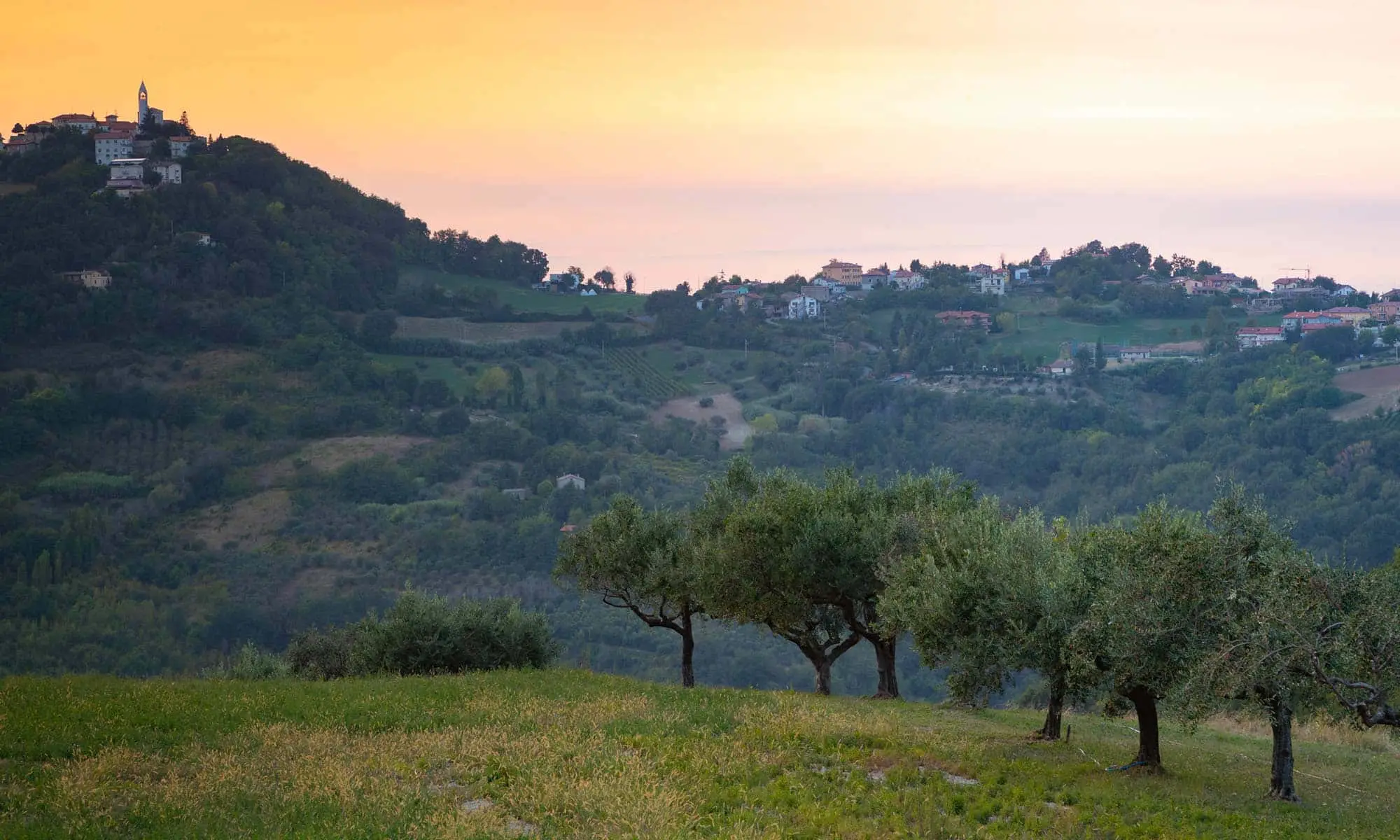
Valconca
Valconca is the valley of the river Conca, inland from the province of Rimini. The Conca rises at the foot of Monte Carpegna, in the Marche, and reaches the Adriatic between Misano Adriatico and Cattolica. Along its course lie the fortified hill villages of the Malatesta lords, hills planted with vineyards and olive groves, and the gypsum caves of Onferno.
Nine towns belong to the Unione dei Comuni della Valconca, based in Morciano di Romagna: Gemmano, Mondaino, Montefiore Conca, Montegridolfo, Montescudo-Monte Colombo, Morciano di Romagna, Saludecio, San Clemente and Sassofeltrio. Further down the valley, towards the coast, San Giovanni in Marignano, Misano Adriatico and Cattolica join them.
The administrative geography changed recently. Under law no. 84 of 28 May 2021, from 17 June that year Sassofeltrio and Montecopiolo moved from the Marche to Emilia-Romagna, into the province of Rimini. Today the valley is almost entirely Romagnol, and only the upper course of the river remains in the province of Pesaro e Urbino.
The fortified hill villages of the Malatesta
Three towns in Valconca are certified by the association I Borghi più belli d’Italia (the most beautiful villages of Italy): Montefiore Conca, Montegridolfo and San Giovanni in Marignano. The valley was a contested border between the Malatesta of Rimini and the Montefeltro, and the fortresses that guard it are what remains of that front.
The fortress of Montefiore Conca dates from the 14th century and was commissioned by Malatesta Guastafamiglia. Besides its military role, it was a summer residence for the family: the Sala dell’Imperatore (Emperor’s Hall) still holds frescoes attributed to the Bolognese painter Jacopo Avanzi, with scenes inspired by the Aeneid.
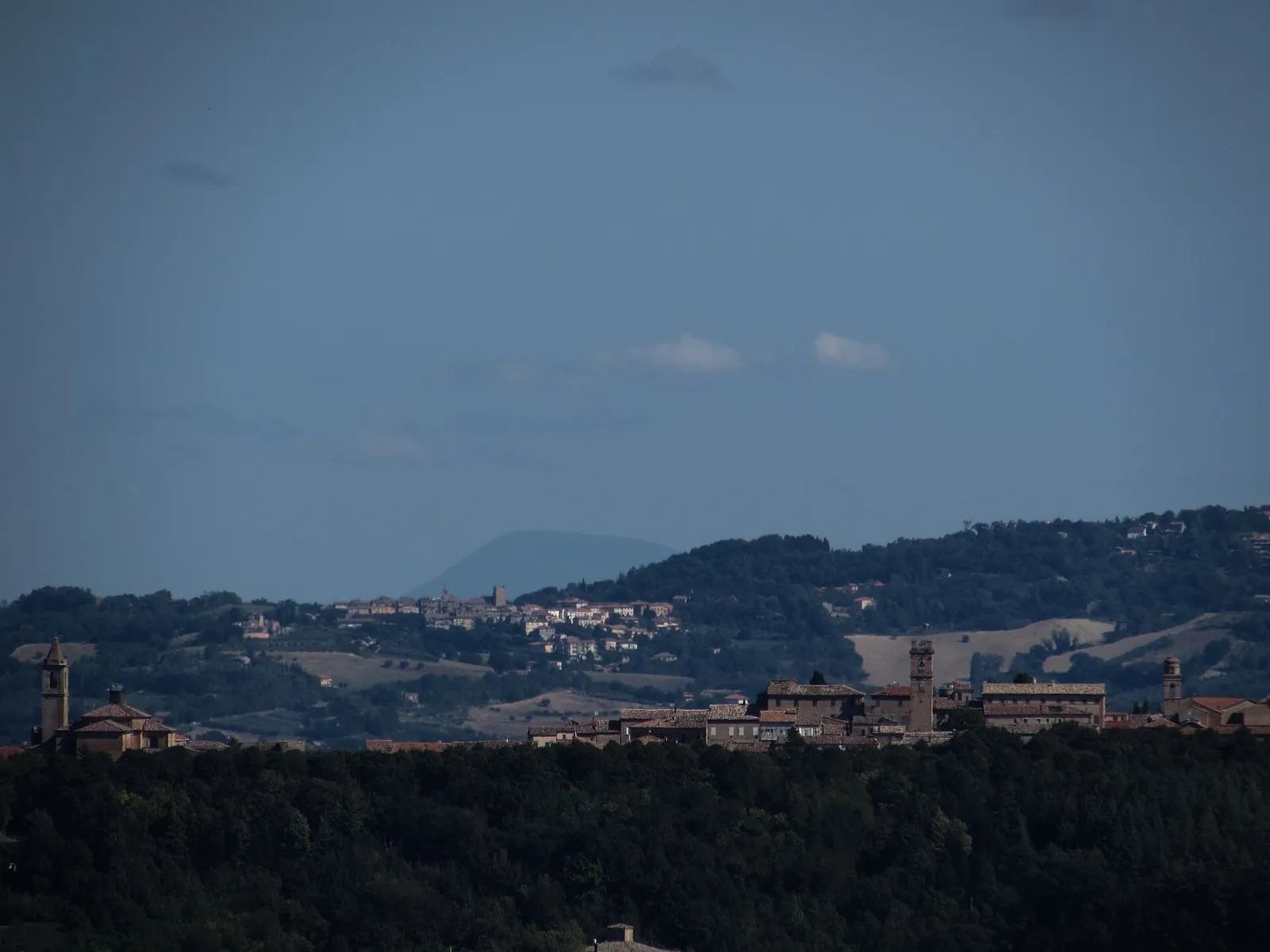
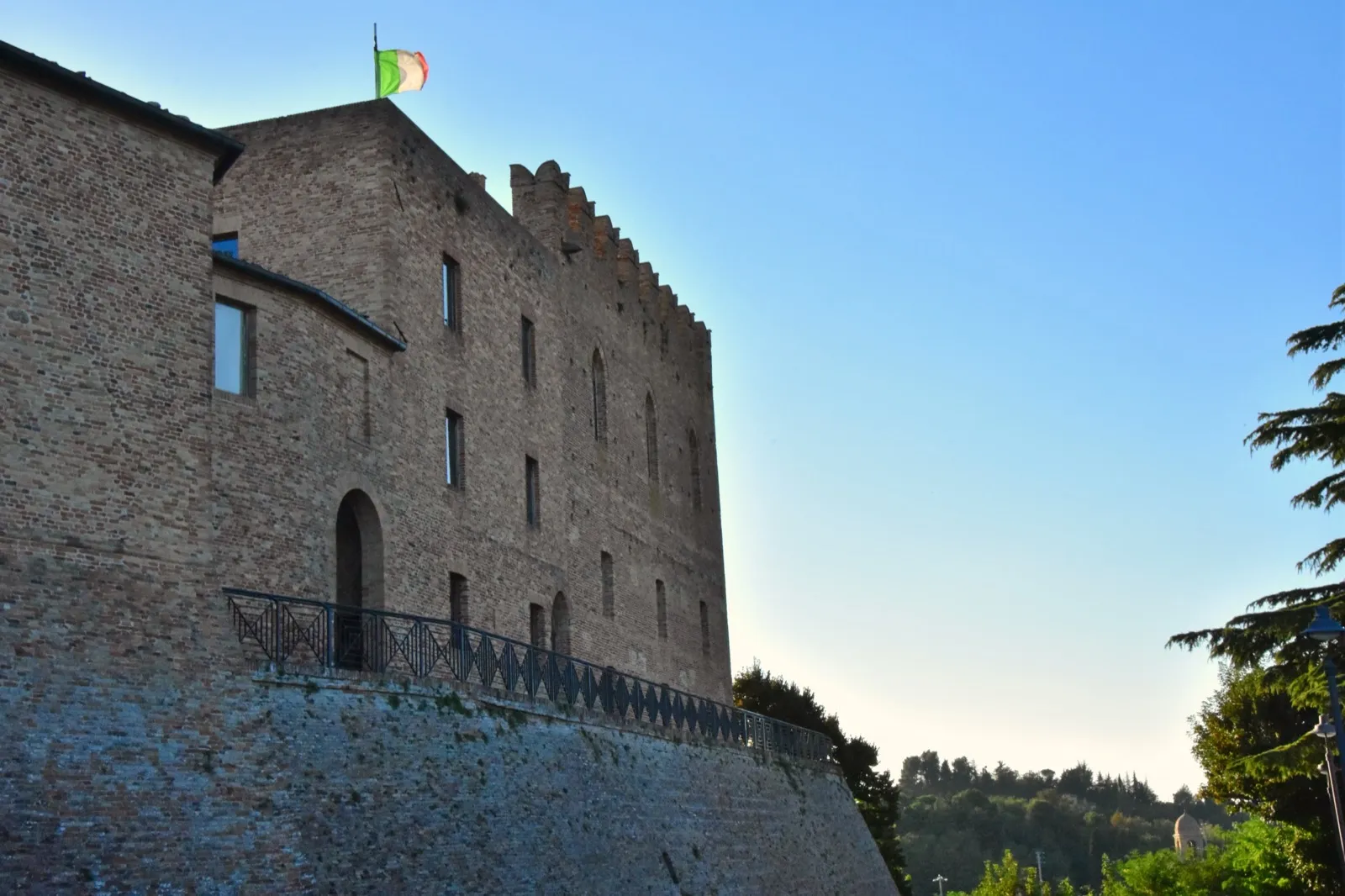
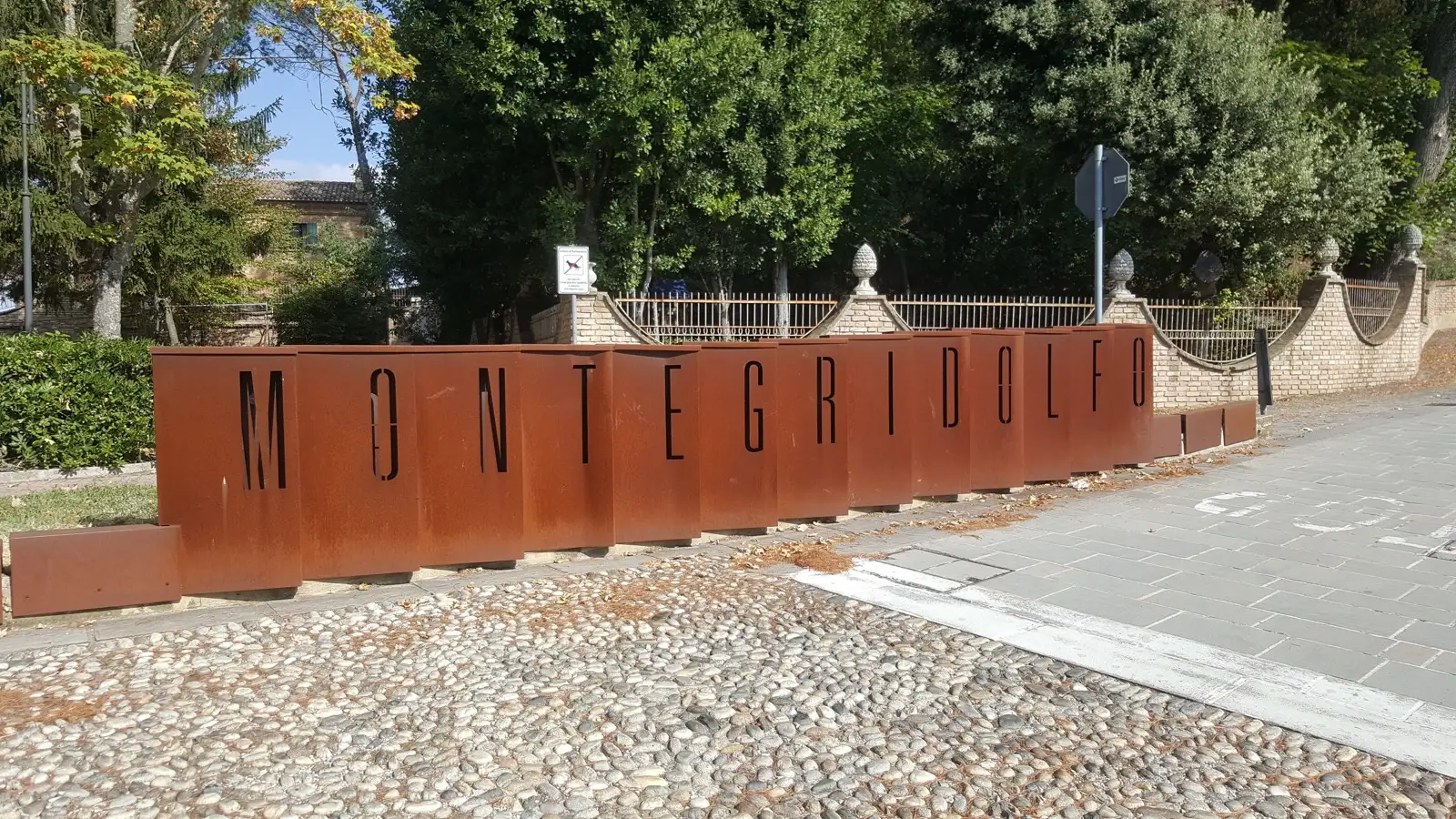
In Mondaino the Malatesta fortress today houses the town hall and the Museo Paleontologico. The village opens onto Piazza Maggiore, a semicircular square closed by a 19th-century neoclassical portico, which locals call Piazza Padella (Frying-pan Square) for its shape. Montegridolfo, by contrast, keeps an almost intact set of walls and a museum dedicated to the Gothic Line, which ran right through here.
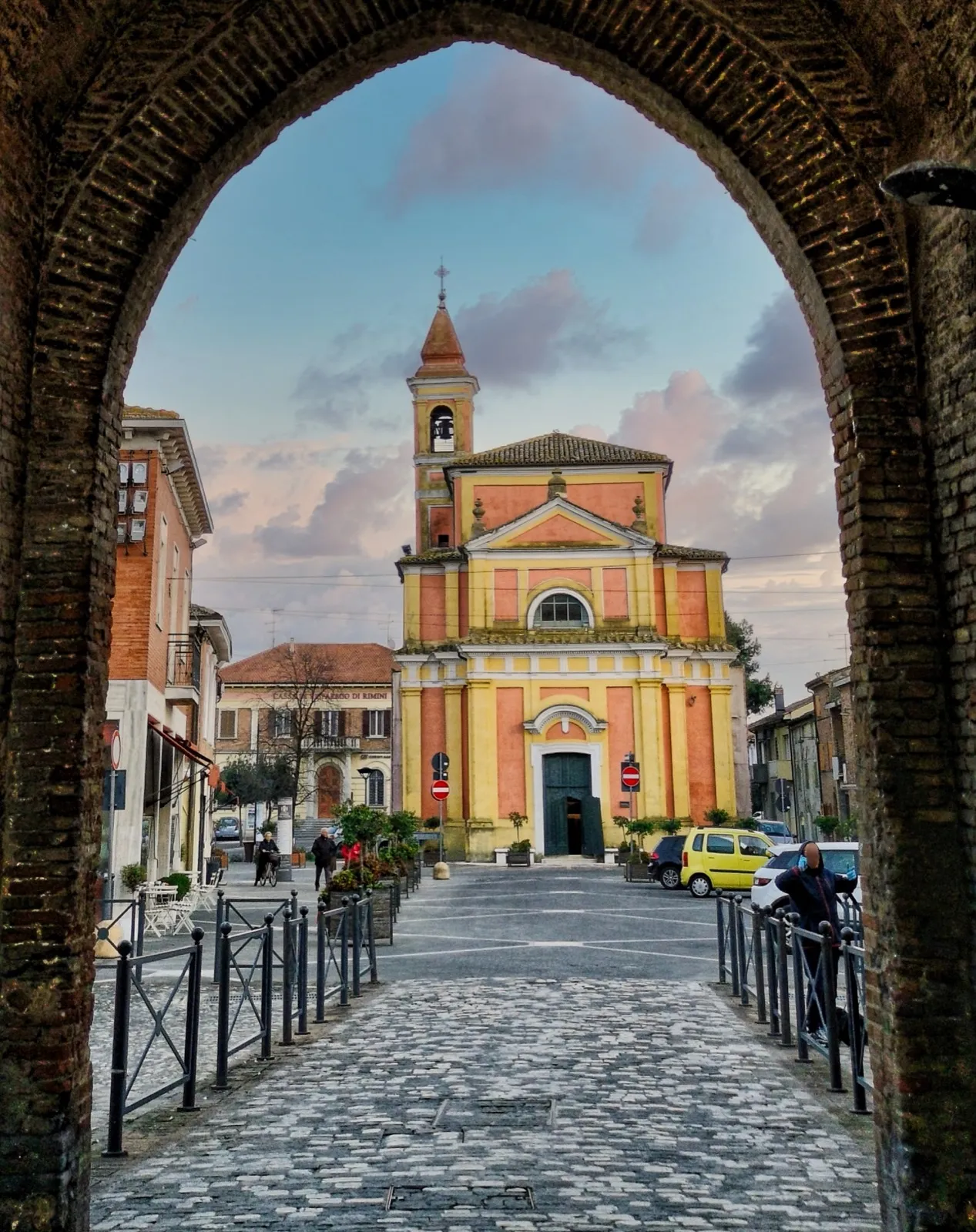
Saludecio has around fifty murals painted in its historic centre, dedicated to the inventions and novelties of the 19th century, and a museum that tells the story of the village alongside Amato Ronconi, born here in 1226 and canonised in 2014. In San Giovanni in Marignano you can visit the underground pits dug along the streets of the centre to store grain, documented since the 15th century: they are the reason for its nickname, the granary of the Malatesta.

The caves of Onferno and the nature reserve
In the town of Gemmano, the Riserva Naturale di Onferno protects 273 hectares around a gypsum outcrop; it was established in 1991. Its caves are home to the largest bat colony in Emilia-Romagna, with more than 8,000 individuals from seven species.
The Gessi di Onferno are one of seven components of the site “Evaporite karst and caves of the Northern Apennines”, added to the UNESCO World Heritage list in 2023. The caves can only be visited with a guide: the updated calendar of visits is published by the Ente Parchi e Biodiversità Romagna.
Events that mark the year
The Palio del Daino in Mondaino is held in August and pits the village’s four contrade (districts), Borgo, Castello, Contado and Montebello, against each other in medieval and Renaissance-style games and contests in Piazza Maggiore.
In San Giovanni in Marignano the Notte delle Streghe (Witches’ Night) has run since 1988 and culminates on the night of 23 to 24 June, the feast of San Giovanni. The Antica Fiera di San Gregorio in Morciano di Romagna grew up around the abbey of San Gregorio, founded by Saint Peter Damian, and has kept its agricultural character: the old cattle market hosts shows of Romagnola cattle, sheep and horses. Dates change from year to year and the programme is published by the town council.