

Fortresses and castles
Between the 14th and 16th centuries, the Malatesta of Rimini and the Montefeltro of Urbino fought over these hills. Most of the fortresses you see today, perched on the rocky spurs of the Valmarecchia and Valconca valleys, were built or reinforced during that conflict, to withstand the new firearms artillery.
The fortresses of the Valmarecchia and Montefeltro
The Rocca of San Leo is the best-known case. After retaking it from the Malatesta, Federico da Montefeltro had it redesigned by Francesco di Giorgio Martini. It later became a papal prison: Giuseppe Balsamo, Count of Cagliostro, was held there and died in 1795.
At Verucchio, the Rocca del Sasso overlooks the town where the Malatesta family originated. At Sant'Agata Feltria, the Rocca Fregoso, built by the Malatesta and later passed to the Fregoso family, still houses a museum of antique weapons.
The fortresses of the Valconca
In the Conca valley, the Rocca of Montefiore Conca dates back to the 14th century. It was built by Malatesta Guastafamiglia as a fortress and summer residence; the Sala dell'Imperatore still holds frescoes attributed to the Bolognese painter Jacopo Avanzi. At Mondaino the fortress today houses the town hall and the Palaeontological Museum. At Montegridolfo the castle keeps an almost intact circuit of walls.
Castel Sismondo and the fortresses of Forlì-Cesena
In Rimini, Castel Sismondo was begun by Sigismondo Pandolfo Malatesta in 1437, probably to a design by the lord of Rimini himself, who had a passion for military architecture.
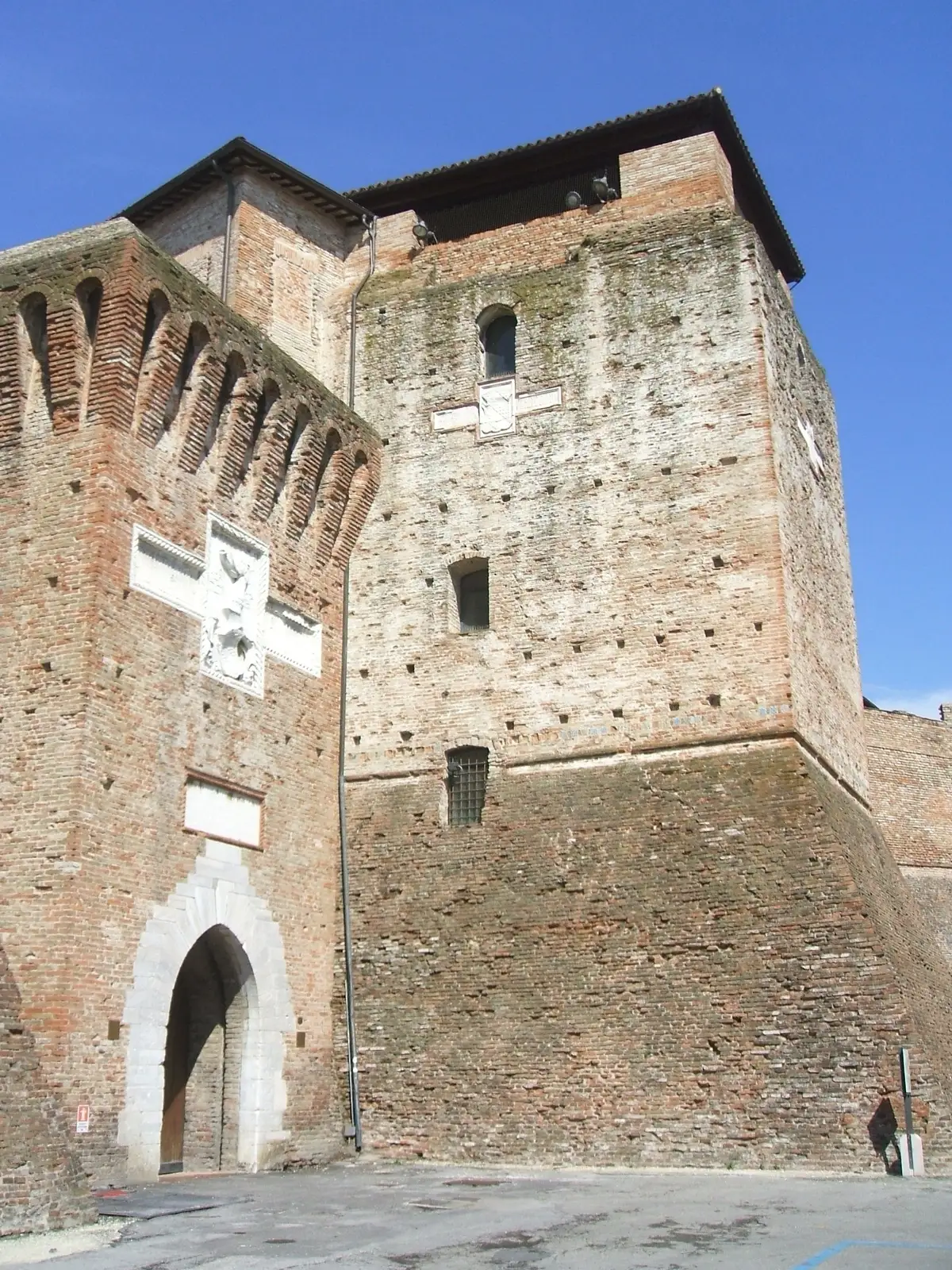
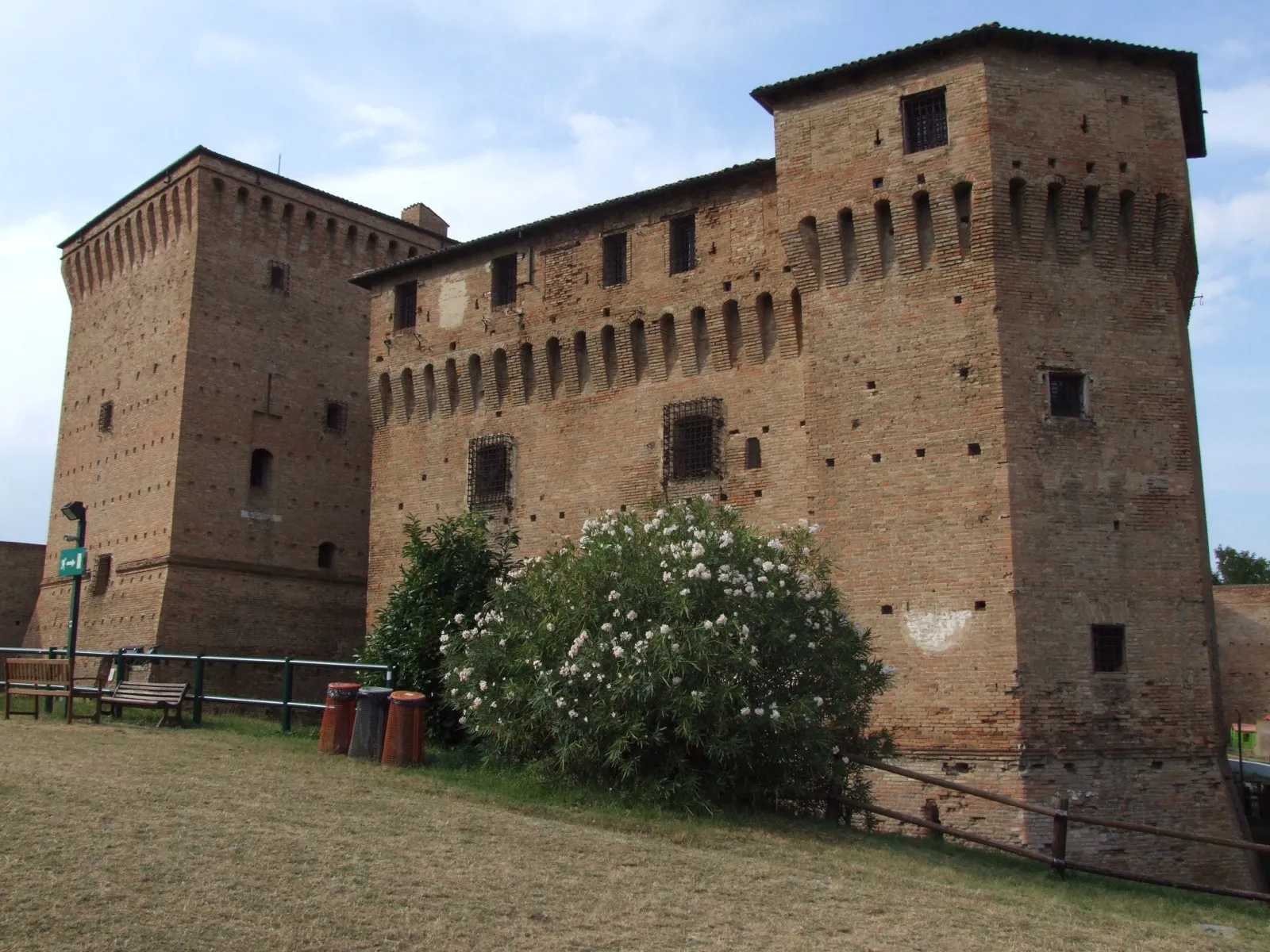
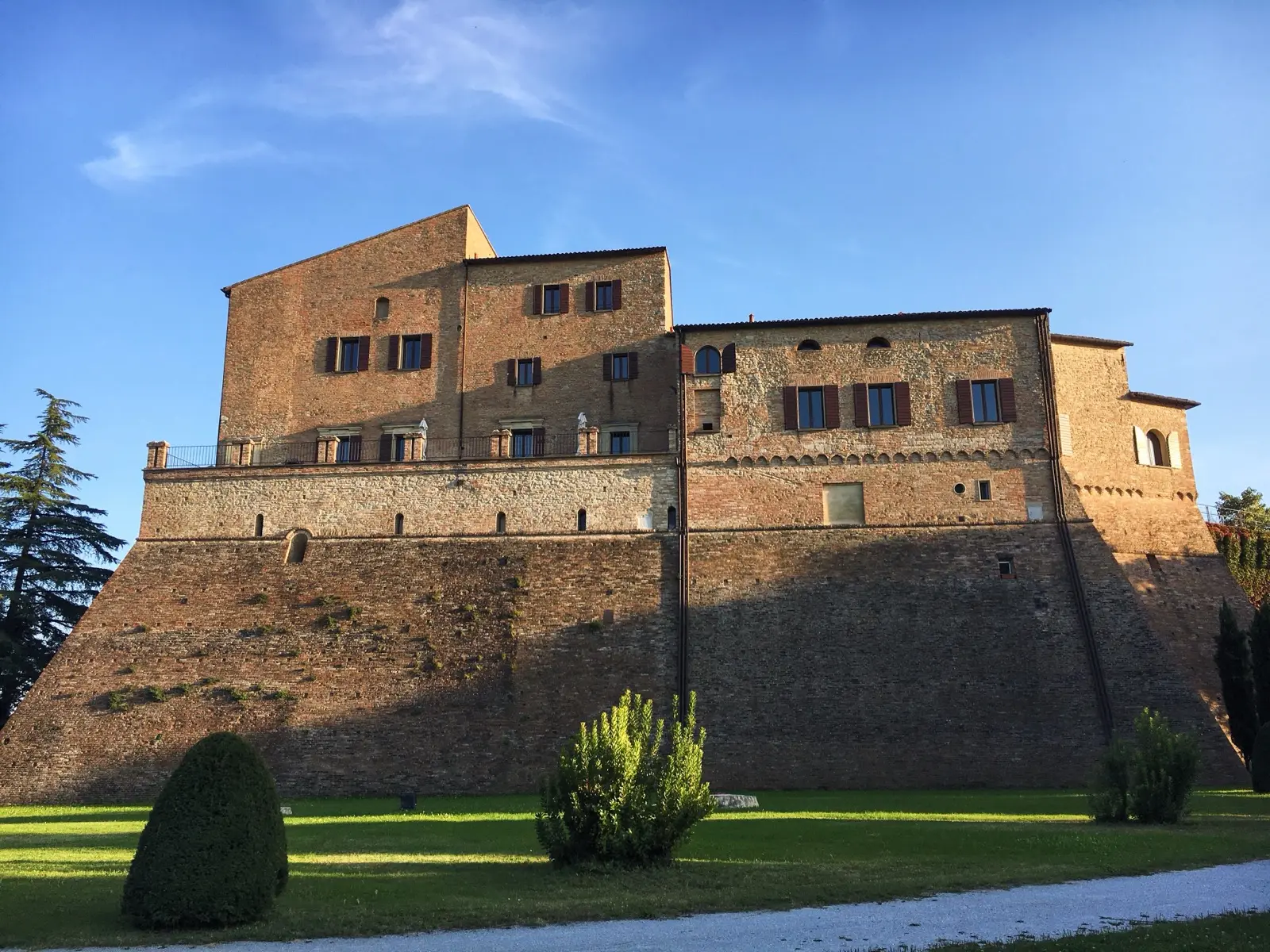
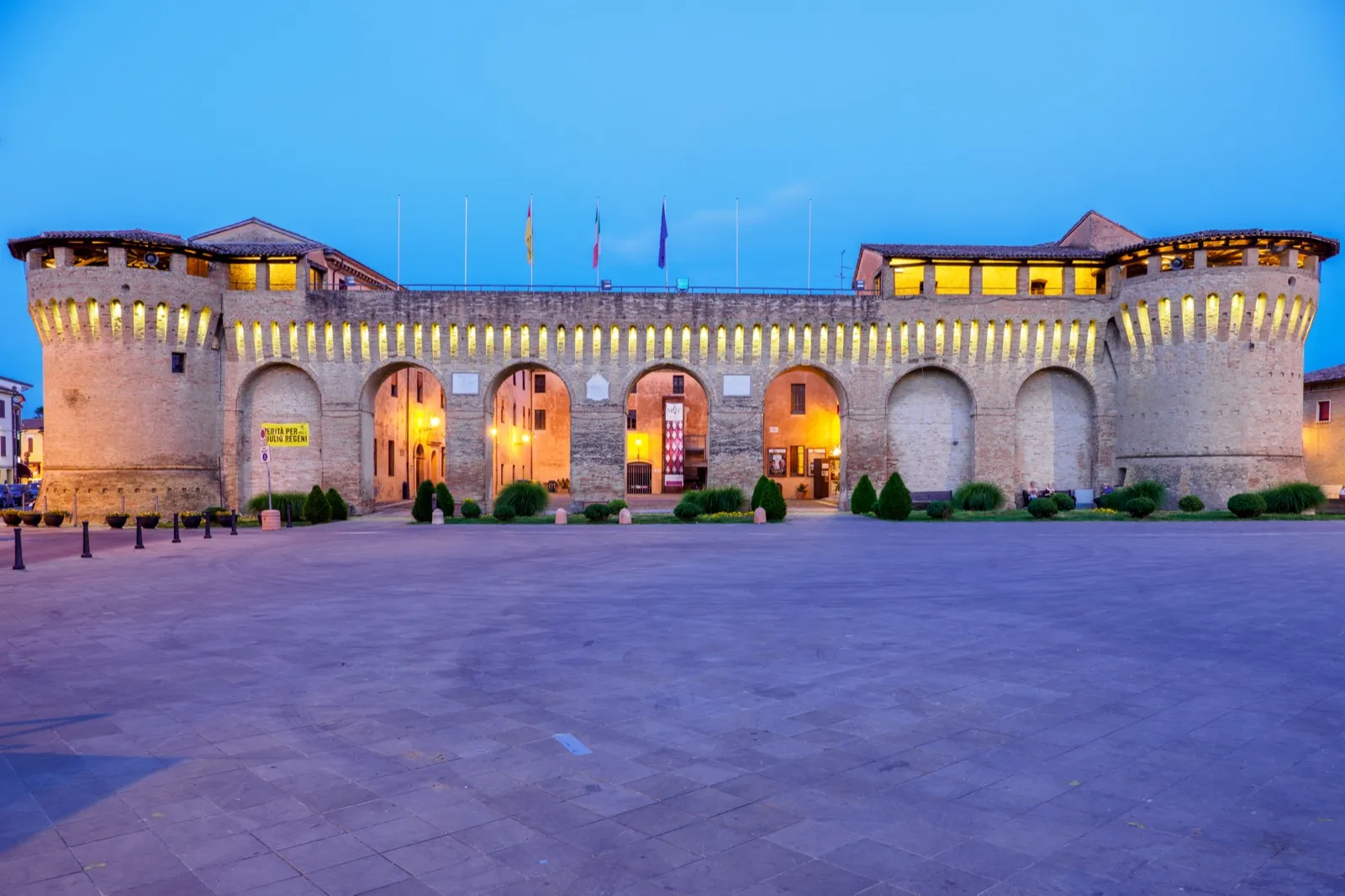
Further north, the Rocca Malatestiana of Cesena was started in 1380 by Galeotto I Malatesta and completed under papal rule in 1477: it now houses the Museum of Agricultural History. At Bertinoro the medieval fortress passed from the Ordelaffi to the Malatesta of Cesena and, in 1493, to Caterina Sforza. The Rocca Albornoziana of Forlimpopoli, built by Cardinal Egidio Albornoz in the 14th century and remodelled in 1471 by Pino III Ordelaffi, later passed to the Riario family, to Caterina Sforza and to the Zampeschi family: today it houses the town hall and the "Tobia Aldini" Civic Archaeological Museum.
The fortresses of the Ravenna area
In the Faenza hinterland, Brisighella grows beneath its Rocca Manfrediana, one of the town's three gypsum pinnacles. At Riolo Terme the Rocca Sforzesca stands within the Vena del Gesso Romagnola Regional Park.
Planning your visit
Many of these fortresses are civic museums or town-hall seats, with limited opening hours or visits by appointment: check the town's website before you go. In the Valmarecchia and Valconca, the villages lie a few kilometres apart, so a single one- or two-day itinerary is realistic.