Valmarecchia
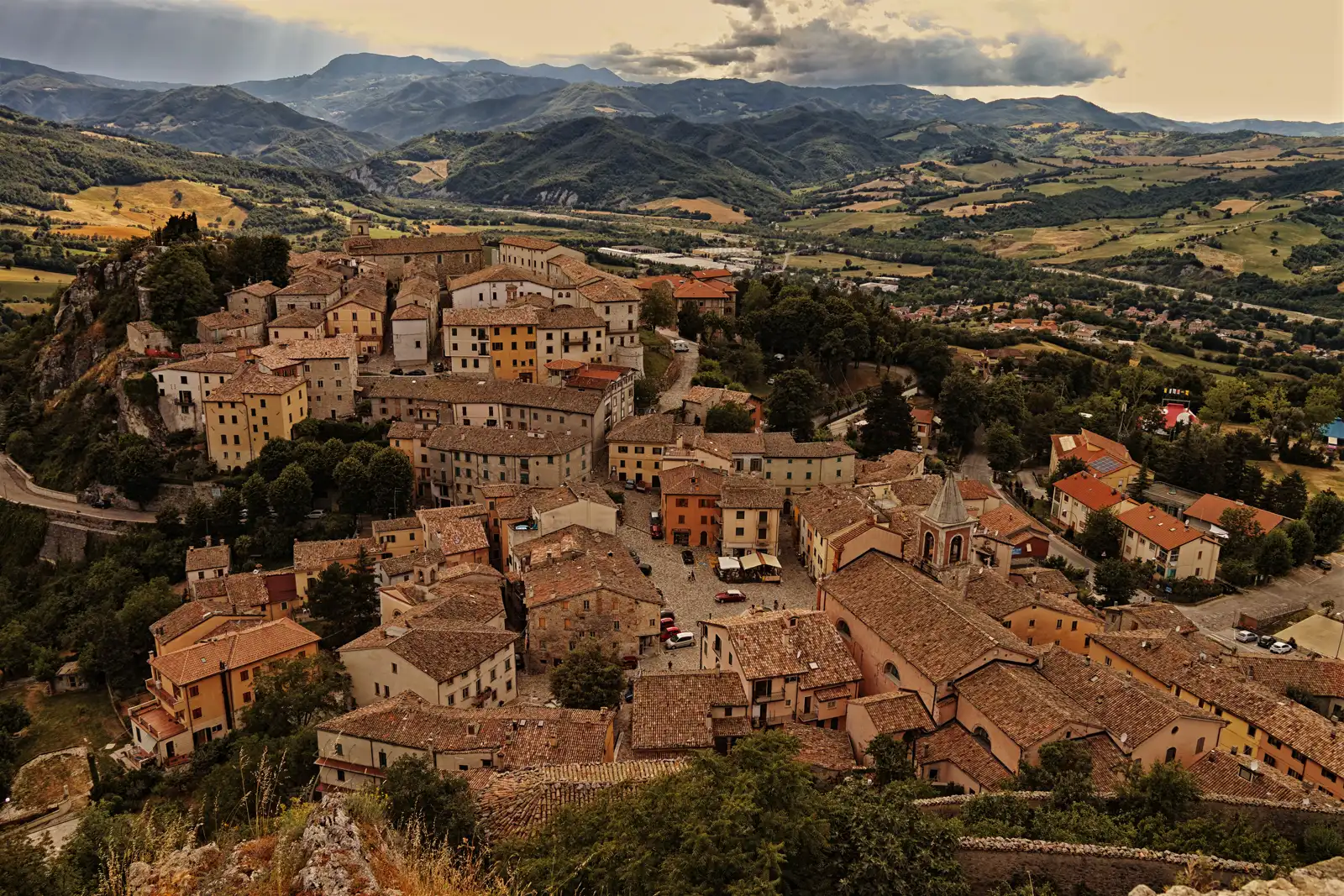
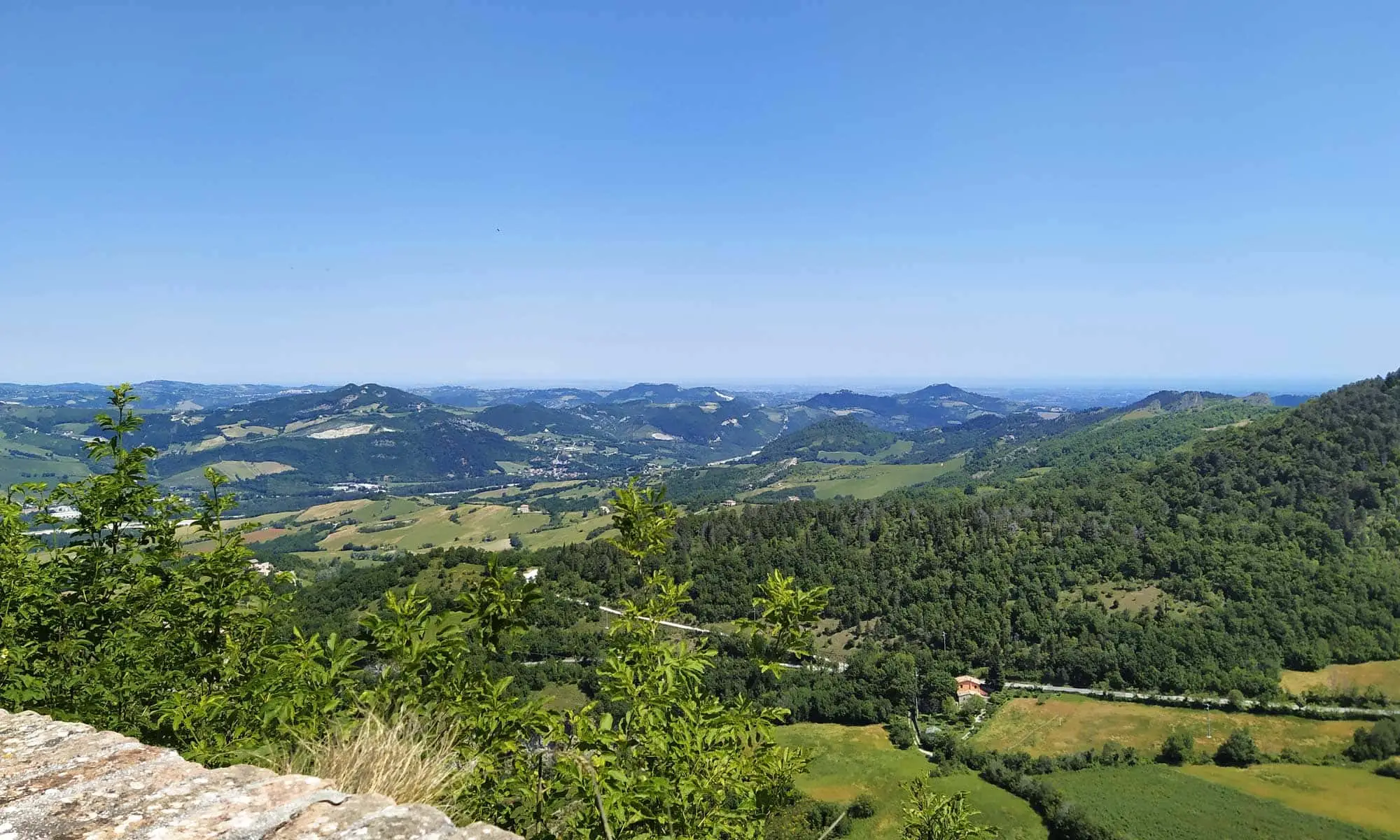
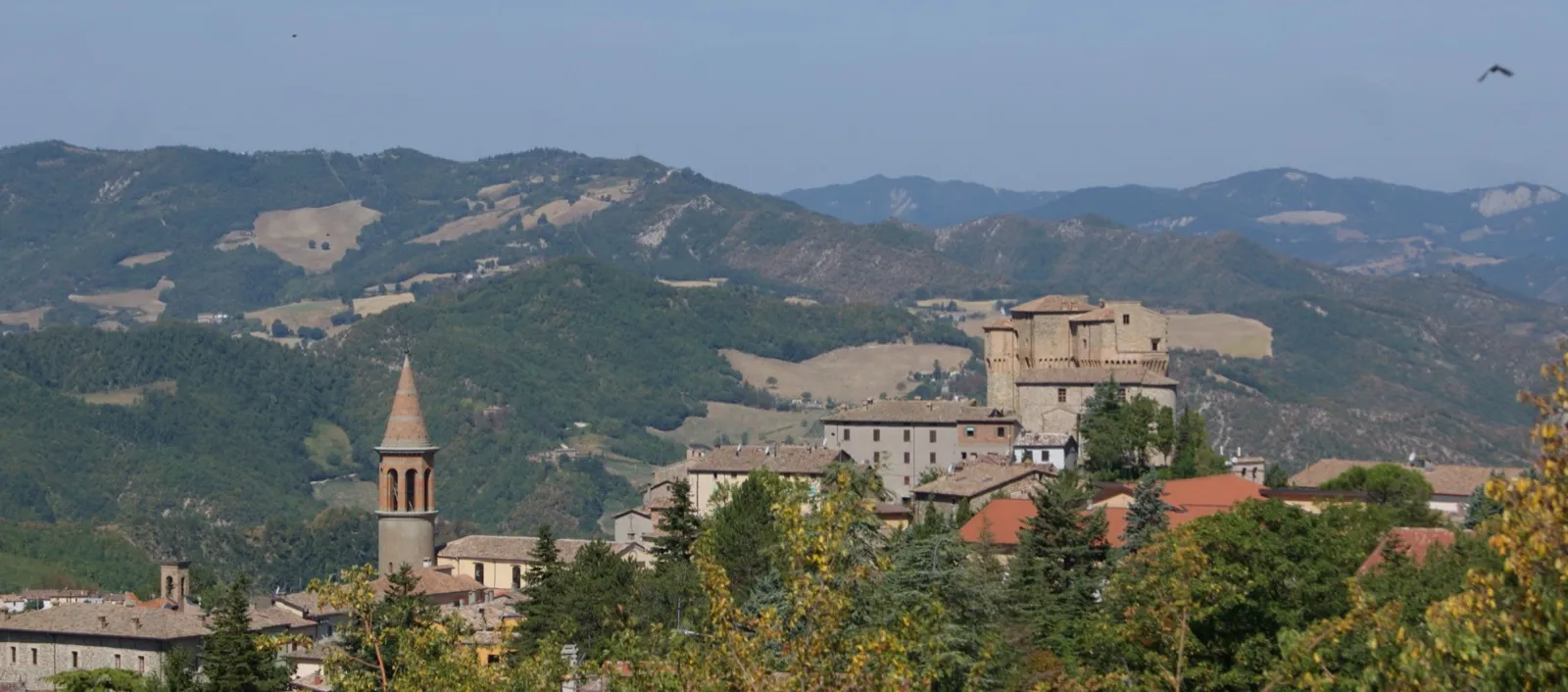
Valmarecchia is the valley of the river Marecchia, which rises on the Alpe della Luna, on the Tuscan side, and flows into the Adriatic at Rimini. Within a few dozen kilometres the landscape shifts from plain to the mountains of Montefeltro, and the villages that guard it, perched on rocky spurs, still hold the fortresses built during the long contest between the Malatesta of Rimini and the Montefeltro of Urbino.
The municipalities of the Unione di Comuni Valmarecchia, based in Novafeltria, are Casteldelci, Maiolo, Montecopiolo, Novafeltria, Pennabilli, Poggio Torriana, San Leo, Sant'Agata Feltria, Santarcangelo di Romagna, Talamello and Verucchio. The valley also touches Tuscany, with Badia Tedalda and Sestino, and the territory of the Republic of San Marino.
The regional border here is recent. Under law no. 117 of 3 August 2009, seven municipalities of the upper valley, Casteldelci, Maiolo, Novafeltria, Pennabilli, San Leo, Sant'Agata Feltria and Talamello, moved from the Marche to Emilia-Romagna and from the province of Pesaro e Urbino to that of Rimini. It was the first case in the Republic's history of municipalities being detached from one region and joined to another, decided by the referendum of December 2006.
San Leo's fortress and the valley's hilltop strongholds
San Leo and Verucchio are both certified by the association I Borghi più belli d'Italia (the most beautiful villages of Italy), and in both the main monument is a fortress.
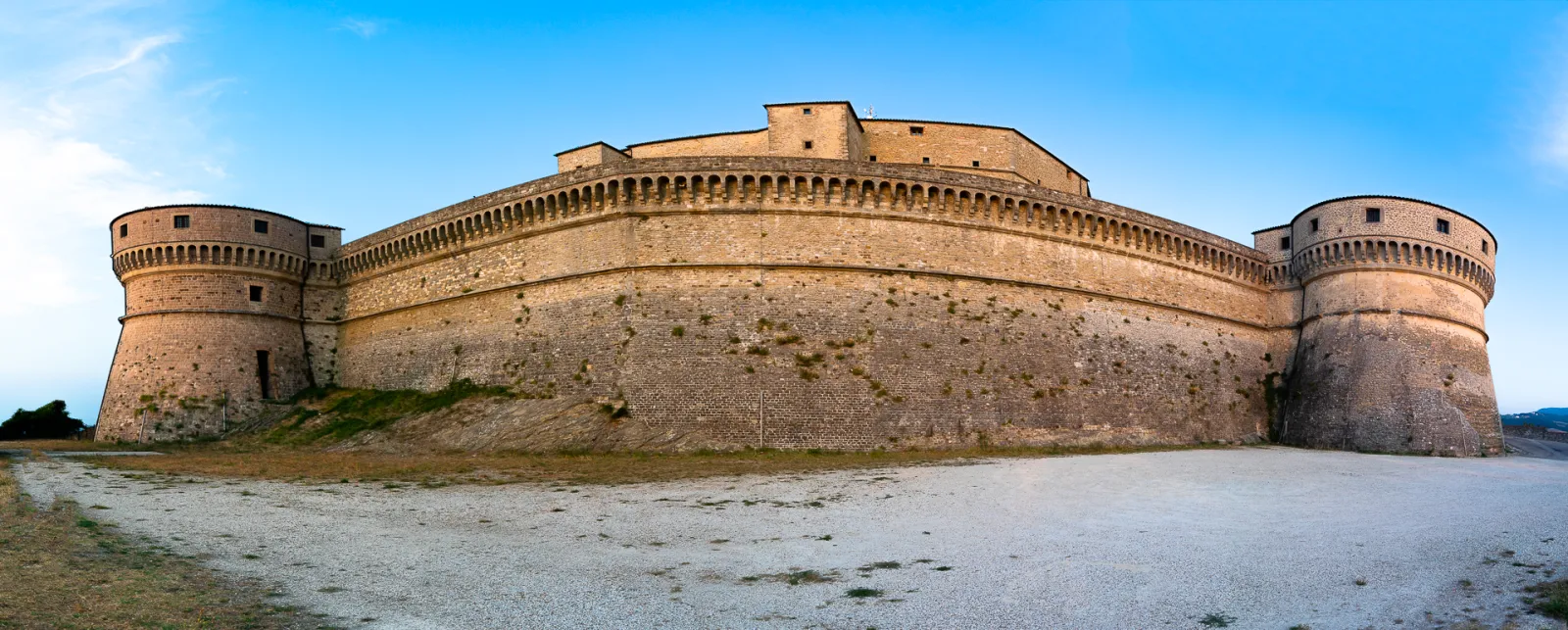
The fortress of San Leo, atop the rocky spur that holds up the village, took its current form in the 1470s, when Federico da Montefeltro entrusted the design to the architect and engineer Francesco di Giorgio Martini. It later became a prison: Giuseppe Balsamo, Count of Cagliostro, was held here from 1791 and died here on 26 August 1795. Today the fortress is managed by the regional Directorate of National Museums of Emilia-Romagna.
In Verucchio the Rocca del Sasso dominates the village, but the rarest exhibit is the Museo Civico Archeologico, housed in the former 17th-century monastery of Sant'Agostino. It holds grave goods from the Villanovan necropolises at the foot of the hill, dating between the 9th and 7th centuries BC: around six hundred tombs, with textiles, wooden furnishings and amber preserved in exceptional condition for their age.
Santarcangelo, gateway to the valley
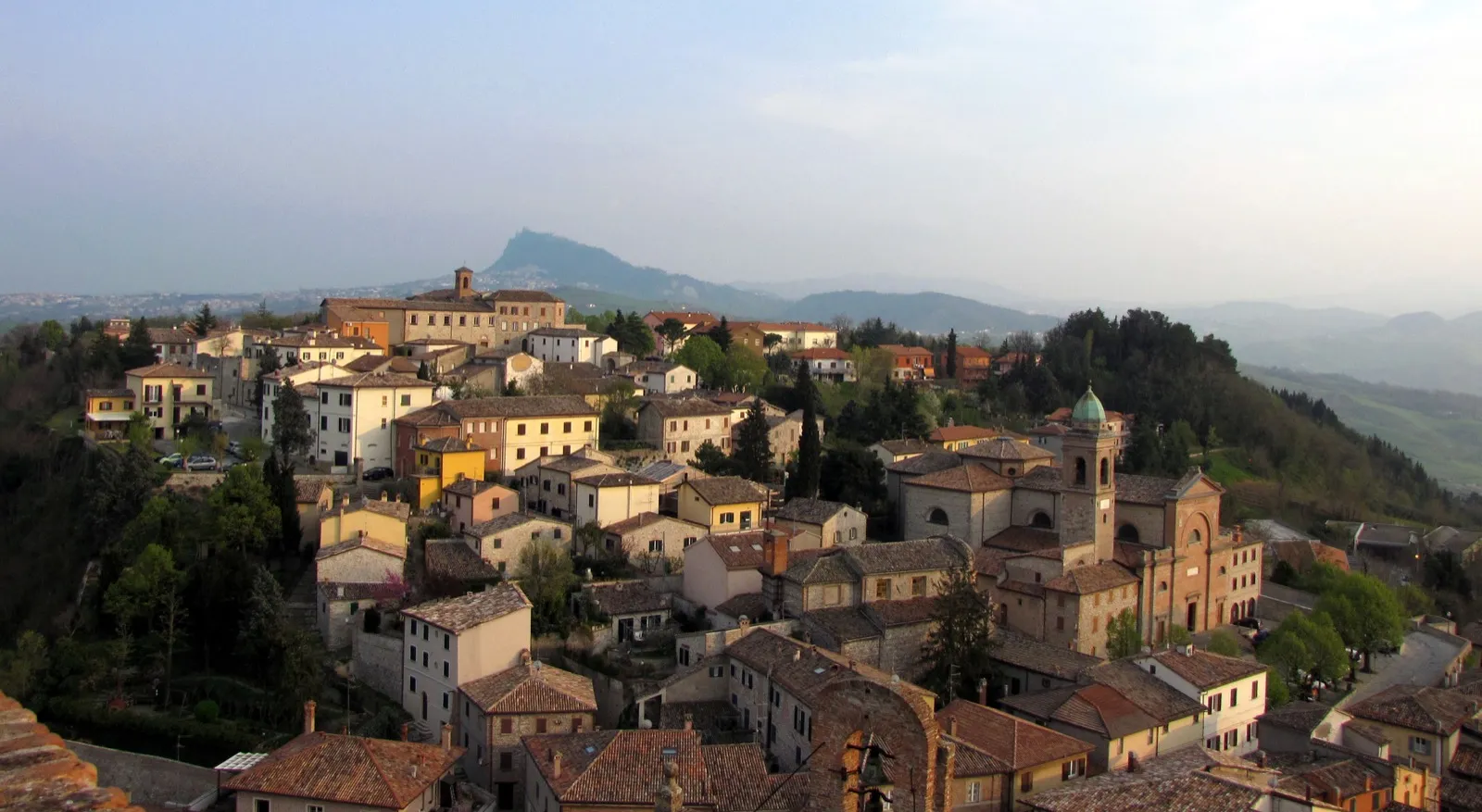
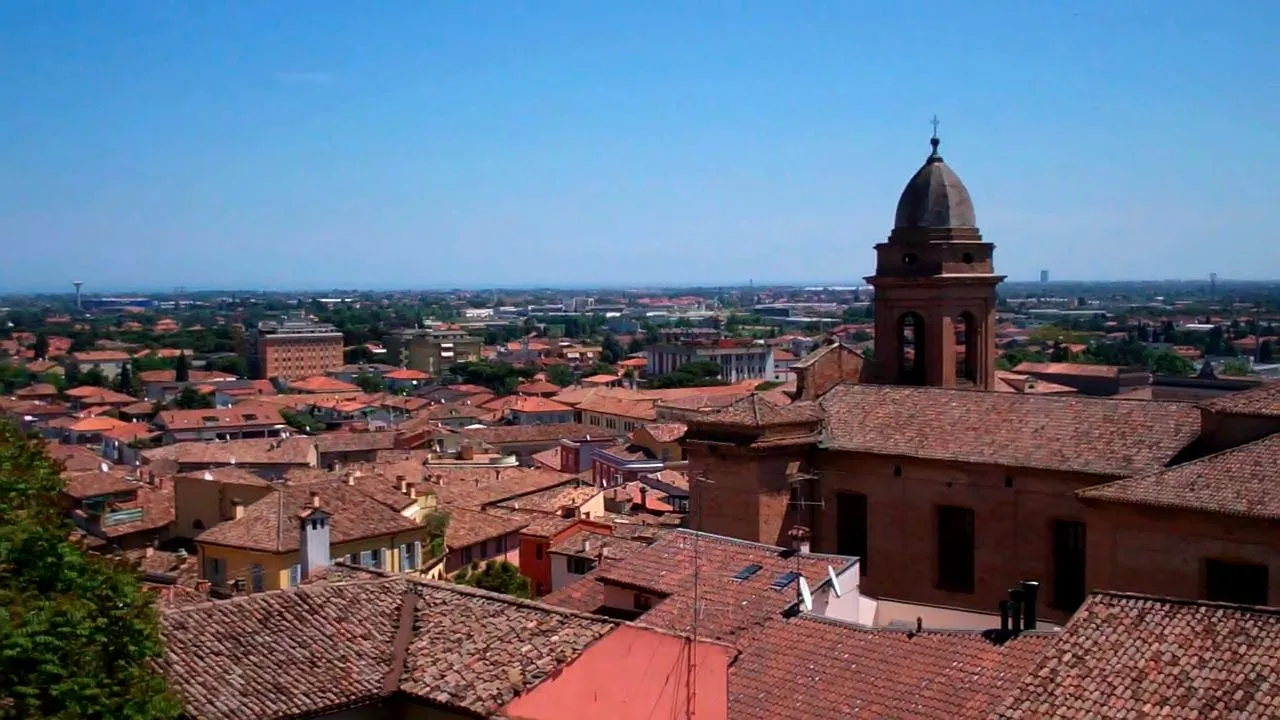
Santarcangelo di Romagna stands where the valley opens onto the plain, a few kilometres from Rimini. Beneath Colle Jovis lies an underground town of around 160 caves cut into sandstone and clay, spread over three levels: the most likely use was as cellars and storerooms, though for some of the more elaborate ones the original purpose is still debated.
Above ground the town hosts two long-running events. The Santarcangelo Festival, founded in 1971, is Italy's oldest festival dedicated to contemporary performing arts. The Fiera di San Martino, known as the Fiera dei Becchi, takes place in November with a seasonal market, food stalls and a festival of street storytellers.
The upper valley: truffles, pit cheese and sulphur mines
In Sant'Agata Feltria the Teatro Angelo Mariani is built entirely of chestnut wood, from the stalls to the supporting columns to the stage, inside the palace that Marquis Orazio Fregoso had built in 1605. It has forty-four boxes on three tiers; it was named in 1872 after the Ravenna-born musician Angelo Mariani and, after decades of closure, reopened in 2002. On Sundays in October the village hosts the Fiera Nazionale del Tartufo Bianco Pregiato, the national white truffle fair.
In Talamello they still make formaggio di fossa, the pit-aged cheese that Tonino Guerra named Ambra for its colour: the wheels are lowered into pits dug in the sandstone in late August and the pits are reopened in November, when the local fair is held.
Perticara, a hamlet of Novafeltria, lived off sulphur for a century. Its mine was the largest in Europe by underground extent, with more than a hundred kilometres of tunnels on nine levels, and closed in 1964 under competition from American deposits. The Sulphur museum, founded in 1970 on the initiative of the local Pro Loco and the municipality, keeps its memory alive.
Higher up, Pennabilli is the village of Tonino Guerra: the Luoghi dell'Anima (Places of the Soul) are the series of installations that the poet and screenwriter scattered through the village. It is also home to Mateureka, a museum of calculation, and the Artisti in Piazza festival.